


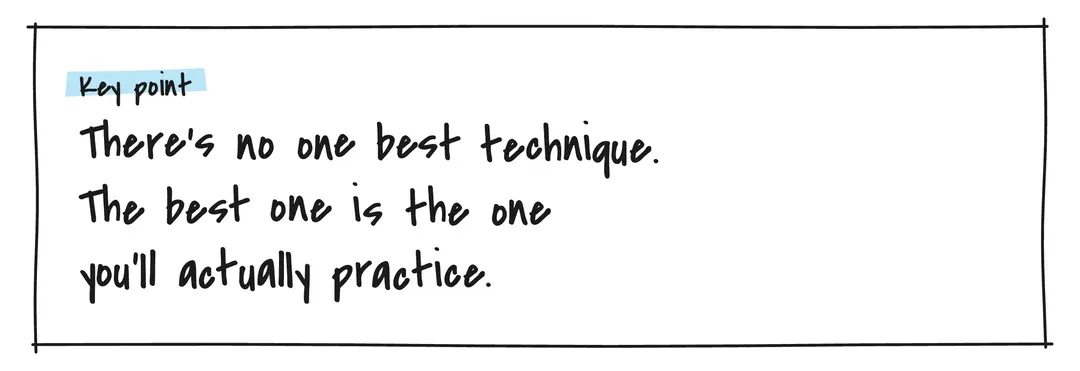
There's no single best relaxation technique for anxiety - the best one for you is usually the one you'll actually practice. Learning effective anxiety relaxation techniques is an important part of coping with stress and anxiety. These techniques won't cure anxiety in isolation. Rather, you may need more extensive anxiety treatment - but they can reduce your anxiety during times of high stress, and the less anxiety you experience, the easier it is to cope with anxiety later.
There are several effective techniques for fighting anxiety. Many people wonder whether these anxiety reduction techniques actually work, or if they're simply a placebo - where only those who believe they work will benefit from them. The reality is that relaxation exercises do work, but they take a type of commitment that not everyone is ready for.
Most places give you techniques to simply manage your anxiety. But you'll still have to deal with anxiety every day. But with regular practice, and other treatment if you need it, anxiety can become much less of a daily struggle.
Before we get to these relaxation techniques, here are several common questions that people have about these types of exercises for relaxation.
Which Relaxation Technique Is Best?
Research hasn't found one technique that works best for everyone, but relaxation in general does help. In a 2018 review of 16 studies of people with anxiety disorders, relaxation therapy reduced anxiety and worry[1]. The techniques with the most research behind them are:
- Slow Breathing Slow breathing exercises are the easiest to learn, and they can calm you within minutes.
- Progressive Muscle Relaxation Tensing and then releasing each muscle group can reduce stress and anxiety in adults[2], especially if you carry your anxiety as tense muscles.
- Visualization Visualization often helps most when your mind won't stop racing.
- Meditation Programs that teach mindfulness meditation can lead to small to moderate drops in anxiety[3].
If sitting still is hard for you, yoga and tai chi combine slow breathing with gentle movement. The technique later in this article takes the best of several of these.
Are Relaxation Exercises and Meditation the Same Thing?
Meditation is most certainly a type of relaxation exercise, but it's not the only relaxation exercise. Many experts have taken key qualities from meditation and put them to use in other exercises, to provide further relaxation benefits.
For example, meditation uses mantras as a way of distracting the mind. Some relaxation exercises use mantras, while others use counting backward or repeating a positive phrase. All of these operate under the same principle - to ease the mind from its stress.
What Are Mantras and Why Are They Used?
Mantras are sounds that a person makes during meditation. Many people know the most common sound, "Om," which is used in a lot of the media depictions of meditation.
The original purpose of mantras was to get the individual in touch with various spiritual deities. Many people have lost the spiritual component of these mantras, but continue to use mantras, affirmations, and counting exercises to get some of the same benefits. These benefits include:
- Mental Distraction The key benefit beyond the spiritual component is the mental distraction. Mantras force your mind to think about something else - to think about the mantra - which reduces the amount of mental energy you can use on the issues that are upsetting you.
- Sensory Use Mantras also stimulate the senses, which is also an effective way to distract from anxiety. Much like the mental distraction of making the mantra, noise stimulates the brain using auditory and possibly even tactile ways (if you feel it in your throat), which has a calming effect.
- Calming Activity The sounds themselves may also be calming. Repeating positive phrases, for example, allows you to be listening to something positive rather than something negative. Mantras may also be relaxing noises.
Other activities, like counting backward or repeating positive phrases, may add to this experience. Even without a spiritual component, making mantras and noises adds to the relaxation experience.
"I've Tried Relaxation Exercises, But I Just Can't Do It."
One of the reasons that more people don't use relaxation exercises is because they haven't seen results when they've tried them in the past.
The truth is that most people can benefit from these relaxation techniques. It just takes the right preparation and attitude:
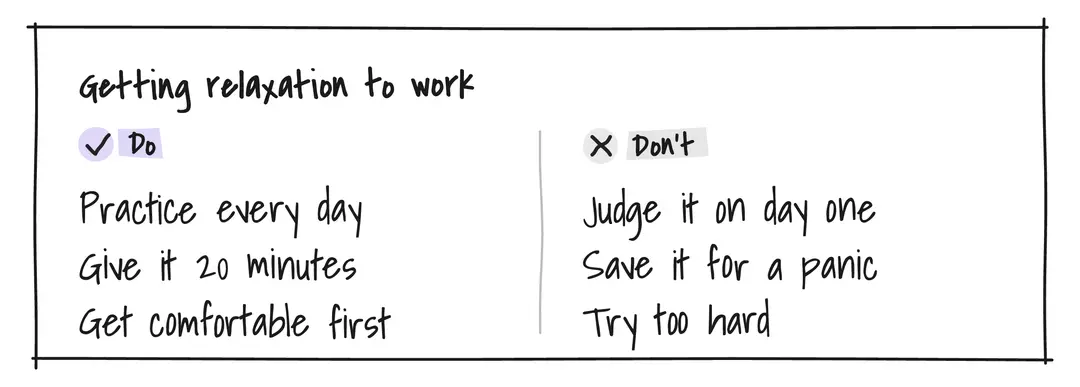
- Make sure you commit to it. Most relaxation techniques take several weeks to master. They're very hard to simply pick up and expect results because in the beginning your mind is just focused on doing everything right. That focus can temporarily add to the stress. But later, when you've had enough experience, it becomes second nature, and the relaxation starts to take effect.
- Stay open minded with a positive attitude. All stress reduction techniques may look and feel a little silly at first, especially if you've never done them before, but in the end, you'll find that they have the effect you've been looking for.
- Don't worry if you're not sure it will work. Relaxation isn't a mind trick, and you don't need to believe in it for it to help. What matters most is that you keep practicing, even on the days it feels pointless.
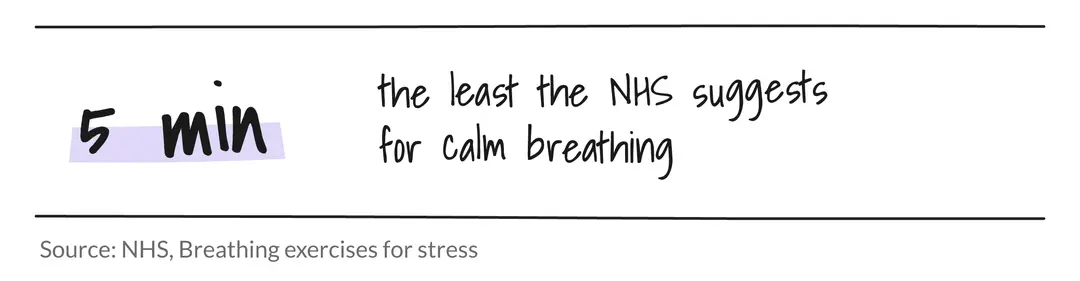
- Give yourself at least 20 minutes every day, and make sure that you're as comfortable as possible - in a comfortable chair, with comfortable clothes, at a comfortable temperature.
What Are the Specific Benefits of Anxiety Relaxation Techniques?
Relaxation techniques are not a cure for your anxiety on their own, but they do provide many tools that are necessary for managing anxiety in the long term. First, they give you a break from your symptoms - something that many people need when they deal with anxiety regularly. Second, they can be used to calm you before activities or events. Since anxiety can cause poor decision making, this can reduce future mistakes, and ultimately future stress.
Finally, relaxation techniques simply take away some of the issues that people with anxiety have to deal with every day. It reduces anxiety and stress, loosens muscles, reduces pain, and may improve your feelings of hope. It's something that can be completed at any time and provide you with that relief that you need.
What is This Relaxation Technique?
It's time to get into the relaxation technique. Remember, you need to commit to it for it to work, and you can't expect massive changes right away. It takes some time for these to become natural, and you need to do it every day so that it starts to become part of your lifestyle, not just something you're doing in a panic.
This relaxation technique is actually a combination of several techniques, taking the best of each to help create one effective strategy. It takes advantage of progressive relaxation, which involves calming each muscle group one at a time by concentrating on a feeling. It starts with the following steps:
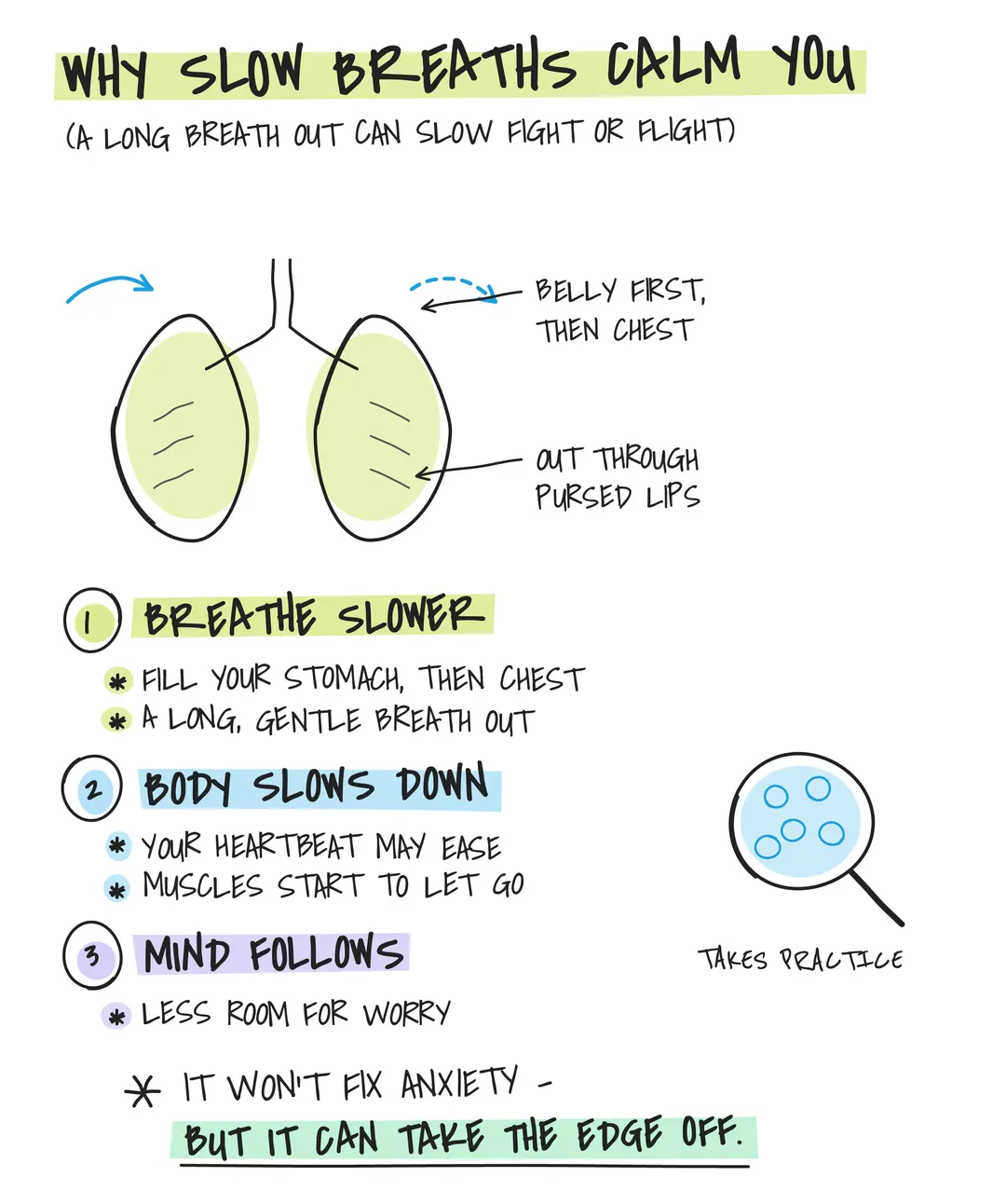
- Close Your Eyes Start by breathing calmly. Breathe in slow and deep with your eyes closed, using your entire diaphragm. You want to fill your stomach first and your chest second, and you want to breathe slowly both in and out. At the peak of your breath (when you have filled up your lungs), hold for a few seconds before you exhale. Breathe in through your nose and breathe out through pursed lips, almost like you're whistling. It's a good idea to practice this type of breathing for a while to get used to it before moving onward. Once you feel your breathing is under control, move forward.
- Count Backwards Slowly count backwards from five to one. You can do this in your mind, or you can do this out loud. Start over every time you reach one. Remember, slow, measured breathing is important. If you count slowly, you'll be able to breathe at a better pace. Repeat this until you feel your mind focus less on your stressful thoughts.
- Focus on Your Body Try to concentrate on the way your body feels. Notice the areas of your body that are tense and relax them. You should feel yourself slumping in your chair. You should feel your muscles let go of your legs. Every muscle in your body should be let go, almost as if your entire body has gone limp and boneless and is now just a puddle of skin. If it helps, try to imagine yourself feeling heavy, warm, and tingly. You want yourself to feel heavy, as though your tense muscles are no longer holding you up. Remember to also relax your face and eyes. You may even want to relax your jaw. It's okay if it opens slightly.
- Turn Off Each Muscle The best way to do the above step is to turn off each muscle one at a time. Start with your right foot. Relax it by imagining it feeling heavy and weak. Then move to your left foot. Then your right leg. Then your left leg. Keep moving your way up until you've reached your face. Then go through it one more round, and make sure that each and every muscle feels turned off.
- Start Visualizing Your next step is to try to mentally transport yourself somewhere truly relaxing. Remember, your eyes should be closed throughout this whole process. Visualize yourself on a relaxing beach, or a pretty park. Try to imagine this place with all of your senses. Focus on the details. What does each flower smell like? What noises are you hearing? Envelop yourself in this location. Don't forget to continue your slow and measured breathing.
- Wipe Negative Thoughts Away When you do have a negative thought or some type of stressor enter into your imagination, visualize it turning into some type of object, and then have some relaxing thing take it away. For example, a stressful boss could be lifted up and taken away by a dove until it's gone. Then go back to imagining all of the relaxing world around you.
- Start Positive Affirmations Now that you're in a relaxing place, start giving yourself positive affirmations or suggestions. These are often the part that feels the most awkward to those new to the technique. But the goal is to make sure that you're thinking about and listening to positive things. It distracts your mind from the negative and provides you with something happy that you can focus on. Examples of these positive suggestions include:
- I feel calm and serene.
- I am having a good day.
- I am a great person.
- I have and will have a pleasant attitude.
- I can handle whatever I'm feeling.
- I love my body.
- I love my life.
- I believe in myself.
Continue this process until you can't focus on your negative thoughts anymore. Try to do it as long as possible, and any time stress or a negative thought enters, have it taken away and keep yourself transported into that new environment, breathing slowly.
What Happens If You Can't Relax?
Remember, this isn't something that provides immediate results. It works when you can learn to do it naturally, and when you first start, chances are you're thinking too hard about each step and expecting too much from it. Relaxation is not about trying too hard. It can take as long as a month of practice for this process to feel natural. That's why you need to commit and practice every day.
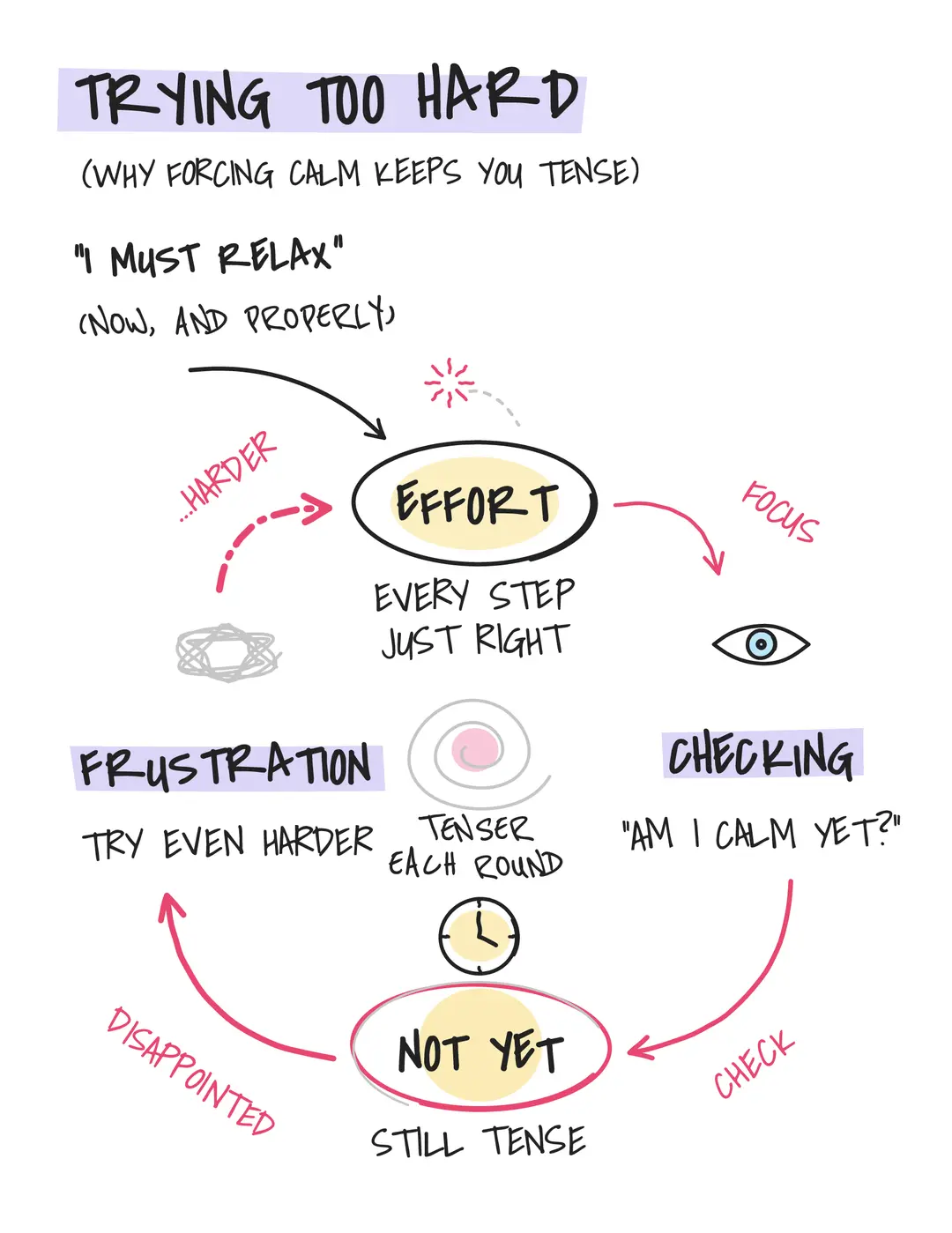
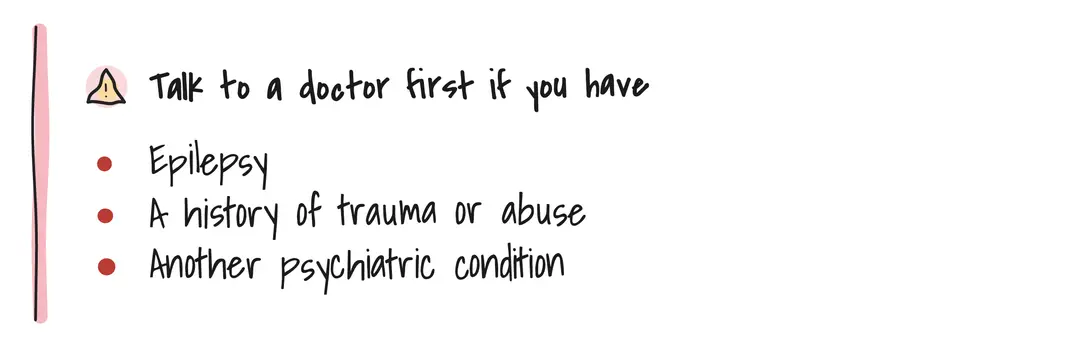
For some people, relaxing can actually make anxiety worse at first. Some people report more anxiety, intrusive thoughts or a fear of losing control while they relax[1]. If that happens, open your eyes, switch to something more active like a brisk walk, and come back to it later with shorter sessions. If you have epilepsy or a history of trauma or abuse, talk to your doctor before you start, since in rare cases some techniques may make symptoms worse.
Do It Yourself Muscle Relaxation Techniques
A similar and beneficial way to relax your body is to tire each muscle so that it can no longer feel tense. Instead of relaxing your muscle with your mind, you tense each muscle firmly for about 5 to 10 seconds and then let your muscle rest for 10 to 20 seconds. You start with your right foot, just like before, and work your way up, one muscle at a time. Tense hard enough to feel it, but not so hard that it hurts, and skip any area that's injured or prone to cramps.
Because you tensed it first, your muscle becomes tired and feels that level of relaxation that your body needs. This type of relaxation tactic is great if you feel tense before sleeping.
You can also repeat it if you don't feel as relaxed as you want. After a few rounds, your entire body can sometimes feel like jelly.
Quick Relaxation When You Don't Have 20 Minutes
Sometimes you need to calm down right now. For a quick version, breathe in gently for a count of about 4, breathe out a little longer, and keep going for a few minutes. Or name 5 things you can see, 4 you can feel, 3 you can hear, 2 you can smell and 1 you can taste. They're two of the simplest ways to stop anxiety quickly when it hits.
Adding Aromatherapy
Earlier I mentioned that the best way to visualize is to also imagine yourself filling all of your senses, not just your sense of sight. This is because when all of your senses are enveloped in pleasant thoughts or sensations, your mind has problems focusing on the stressful thoughts and instead finds life more relaxing.
Often, because of where you may be, you'll find that you have to imagine the scent. But if you're at home in a comfortable place, take advantage of it by utilizing aromatherapy scents, so that you do not just imagine the smells anymore - you're surrounded by them.
Aromatherapy is an option that few understand. Studies have shown mixed results about whether or not aromatherapy is a practical solution for anxiety[4]. Regardless of the truth, aromatherapy does help you fill your senses with a smell that is extremely pleasant, and that can be a powerful tool for fighting your anxiety symptoms during a relaxation exercise.
Some valuable aromatherapy scents for anxiety include:
- Basil
- Cinnamon
- Geranium
- Juniper
- Lavender
- Patchouli
- Rose
- Sandalwood
Many other scents are believed to have calming properties, and each person may have their own preference. Feel free to choose a scent that you find soothing, regardless of whether or not it is supposed to help with anxiety.
Use essential oils in a diffuser or diluted in a carrier oil, not straight on your skin. Many can cause a rash, and some can be poisonous if they're swallowed, so keep them where children can't get to them[5].
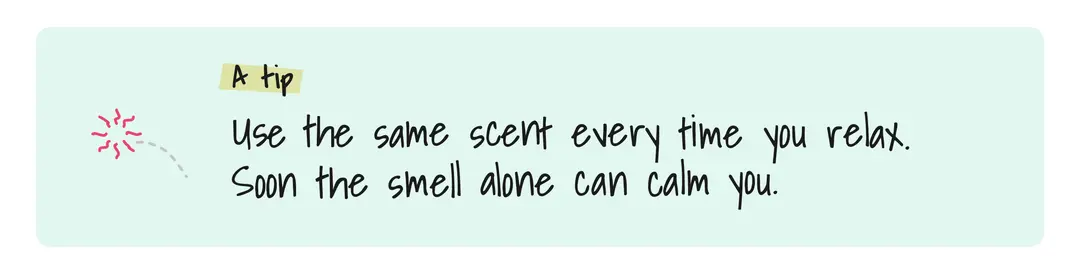
Once you've found the scent you like, surround yourself with it. You can do this at any point during the day - not just when you're performing your relaxation exercise - but it's especially valuable if you are combining it with other relaxation methods. If you pair it with other relaxation techniques before using it for any other reason, you'll eventually find that the smell itself becomes associated with that calming feeling, and you can use the smell almost anywhere.
The "Let It All Out" Technique
Generally, the above technique is one of the best relaxation tools available. But some people find that their anxiety is causing them too much energy to sit back and relax. They need to let out that energy, and they can do that with what I like to call the "Let It All Out" technique.
This is when you simply let everything out all at once. In a quiet place with no one around (since it can be sort of embarrassing if people see you), run around in a circle, flail your arms, scream and yell and do anything you want, no matter how silly it looks (as long as it's safe, of course). Throw a tantrum. Jump on your bed. Throw a pillow on the floor. Laugh hysterically. As the name implies, hold nothing back. Whatever you want to do, do it. Let go of your sense of what's ridiculous for a while and let yourself go wild until you've let it all out.
You should overkill it. Do it for a full 5 to 10 minutes (much longer than it sounds). When you feel like you've let it all out, keep letting it out. Don't stop until you've released so much of that pent-up frustration, anxiety, and stress that you are left drained and satisfied.
Not everyone benefits from this type of technique, and you want to make sure that you can do it in private. But those who feel like they simply need to let out their emotions may find this a better tool than simply relaxing.
Finally, Don't Forget Art
Creativity is also a great relaxation tool. It's an outlet for your emotions, while giving you something to focus all of your mental energy on. When you draw, paint, or write, you're turning your stresses into a tool - something that, in some ways, is a good thing, because it sparks inspiration for some type of art form.
Any artistic, creative activity that you enjoy doing can be immensely beneficial for reducing anxiety, and while it may not necessarily be considered a traditional relaxation strategy, it's one that definitely has its benefits. Music can work the same way. Listening to calm music, or playing an instrument if you do, gives your mind something pleasant to follow instead of your worries.
Once You've Relaxed, What's Next?
All of these strategies play an integral role in your ability to fight stress and reduce the way anxiety affects your day to day life. But they're not solutions for anxiety - merely tools to make living with anxiety easier.
If your anxiety is still there most days after a few weeks of practice, or it's making work, sleep or relationships harder, talk to your doctor. Talking to a therapist, especially one trained in CBT, is one of the most effective treatments for anxiety, and relaxation skills fit well alongside it. Many people also combine them with other natural anxiety remedies.


