



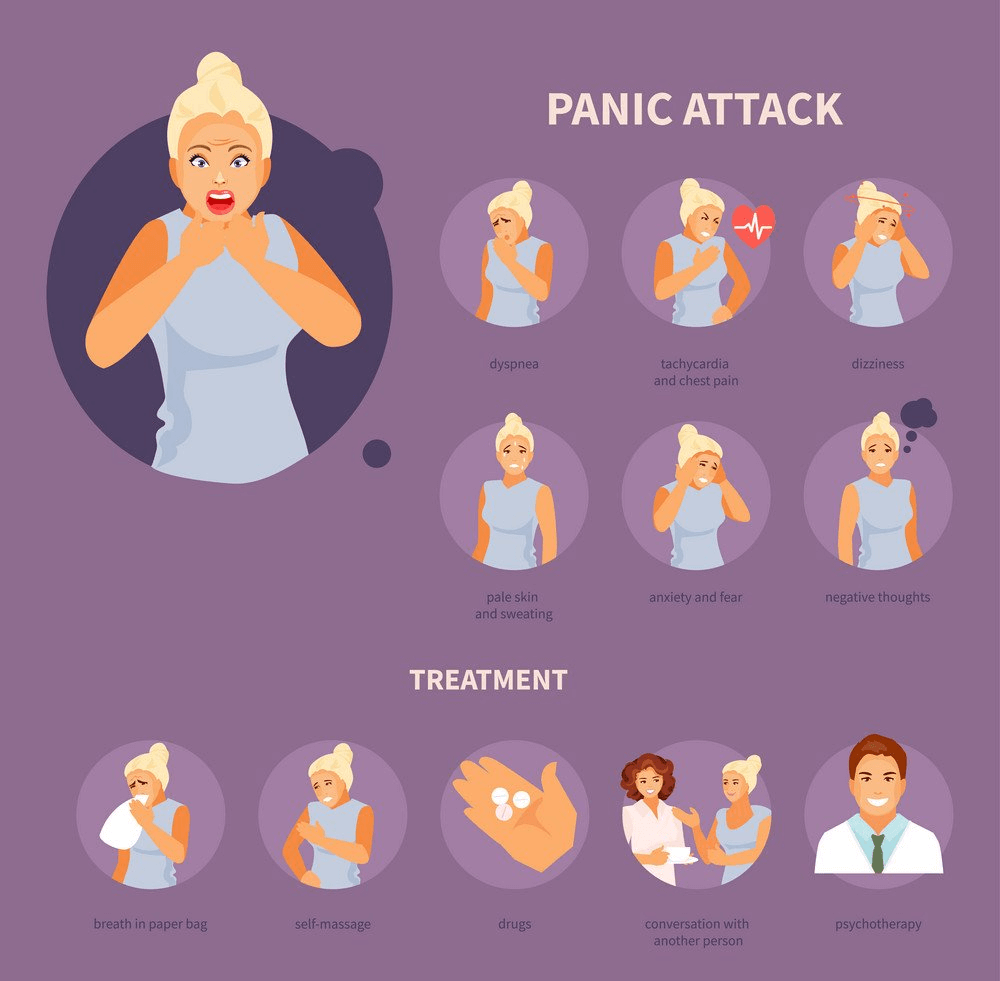
It's somewhat unfair to tell someone suffering from panic attacks without panic disorder that their panic attacks aren't severe, because all panic attacks are severe - otherwise they would not be panic attacks.
Just because all panic attacks are severe doesn't mean there cannot be subtle differences in severity. Below is an explanation of what would constitute severe panic attack, and tips about how to treat it.
What Makes a Panic Attack Severe
Since all panic attacks are severe, how does one figure out what makes a severe panic attack?
There are two important characteristics that make some panic attacks more severe than others:
- How much they disrupt healthy living.
- How much your life is controlled by the attacks.
It's not whether the attacks themselves are severe, but rather whether the entire disorder is causing a severe disruption of your ability to lead a healthy or happy life. Think of it in terms of the entire disorder rather than the attack itself.
When assessing severity, psychologists will generally look at the following:
- Frequency Panic attacks don't happen often for everyone. Some people experience panic attacks very infrequency. Others experience one or more panic attacks every day. Since panic attacks by their very nature are extremely disruptive, it stands to reason that those with frequent panic attacks may be experiencing a more severe reaction, because their panic attacks are not under control.
- Panic Attack Severity Of course, it is possible for panic attacks themselves to differ in severity as well. Much of that is what occurs during the panic attack. Those that recognize that it's a panic attack are often slightly more in control than those that call the hospital or lose control of reality during the attack.
- Fear of Attacks While panic attacks are a distinct feature of panic disorder, you don't need to have frequent panic attacks to have panic disorder. If you constantly suffer from fear of panic attacks or overwhelming anxiety about the potential of experiencing a panic attack, it's highly likely that you are suffering from a form of panic disorder.
- Avoidance Those with panic disorder often find that they start to avoid things as a response to the attacks. These include social situations, difficult work environments, exercising, and possibly even places that they used to enjoy visiting. The latter may create agoraphobia, which is a common secondary condition to panic disorder and refers to people that do not leave their home or place of comfort because of their intense fear of what may happen if they leave.
- Secondary Mental Health Issues Those with panic attacks are also more prone to developing depression and other mental health disorders as a response to their panic attacks. If depression starts to develop, the overall experience of panic disorder may be much worse.
Someone with severe, debilitating panic attacks that does not show any avoidance behaviors or depression may still have severe attacks, but someone with slightly less severe attacks that has developed agoraphobia and depression and struggles to focus on work or attend social functions may have more severe panic disorder.
How Do Psychologists Assess Severity?
Psychologists may use a variety of tests to determine how severe your panic disorder is, or they may simply use their own experience and expertise. In general, severity of panic disorder plays only a moderate role in treatment, since the treatments for panic disorder tend to be similar regardless of severity.
How to Fight Severe Panic Disorder
Severe panic disorder requires a complete and intensive treatment. All anxiety is treatable, but the process does take time and requires you to be committed to your own mental health.
For severe panic disorder though, it starts by simply reducing the severity of your panic attacks and how you react to them. Less severe panic attacks cause less fear, which causes less avoidance, which causes fewer attacks. So while reducing panic attack severity doesn't cure panic disorder, it does improve the likelihood that a treatment of panic disorder will work. Consider the following:
- Work on Breathing The absolute worst panic attack symptoms appear to come from hyperventilation. Often during panic attacks people breathe too quickly and too often because they feel as though they cannot get enough oxygen in. Learning to slow your breathing can reduce the severity of the attack. Make sure each breath takes 15 seconds (5 seconds in, 3 seconds holding, 7 seconds out) and don't try to breathe deeper than you need to, no matter how much it may feel that you are not getting a deep breath.
- Healthy Living You'll also want to decrease the frequency of some of your anxiety triggers. Many anxiety triggers are caused by easy to change issues with healthy living, such as a better diet, more sleep, and more exercise. Healthy living is not a cure for panic attacks, but it will decrease some of the physical sensations that may lead to further panic.
- Desensitization While best left in the hands of a psychologist, it's possible to try at-home desensitization for panic attack triggers. For example, if you tend to feel severe anxiety when you feel dizzy, you may be instructed to get used to feeling dizzy by spinning around in a chair and learning to control the anxiety you experience as a result. You can do this for almost any panic attack physical trigger. You should consider consulting with a professional if you wish to use this method.
- Learn Healthy Distraction Techniques Panic attacks tend to be less severe when you aren't "in your own head." So figure out healthy ways to get out of your own head and distract yourself even when you're panicking. One very effective way is to make a phone call to someone you trust. Talking on the phone distracts the brain from focusing on your thoughts as easily. Also, if you're around other people, don't be shy about your panic attacks. Tell your friend that you're in the process of having one. It may be embarrassing, but many people find that their panic attacks are more severe when they try to stop them without telling anyone.
These strategies are not a replacement for better coping, nor are they going to cure severe anxiety on their own. But what they should do is make your panic attacks slightly less severe. Less severe panic attacks should create less fear, which should reduce other severity problems with panic disorder.


 Trusted Source