



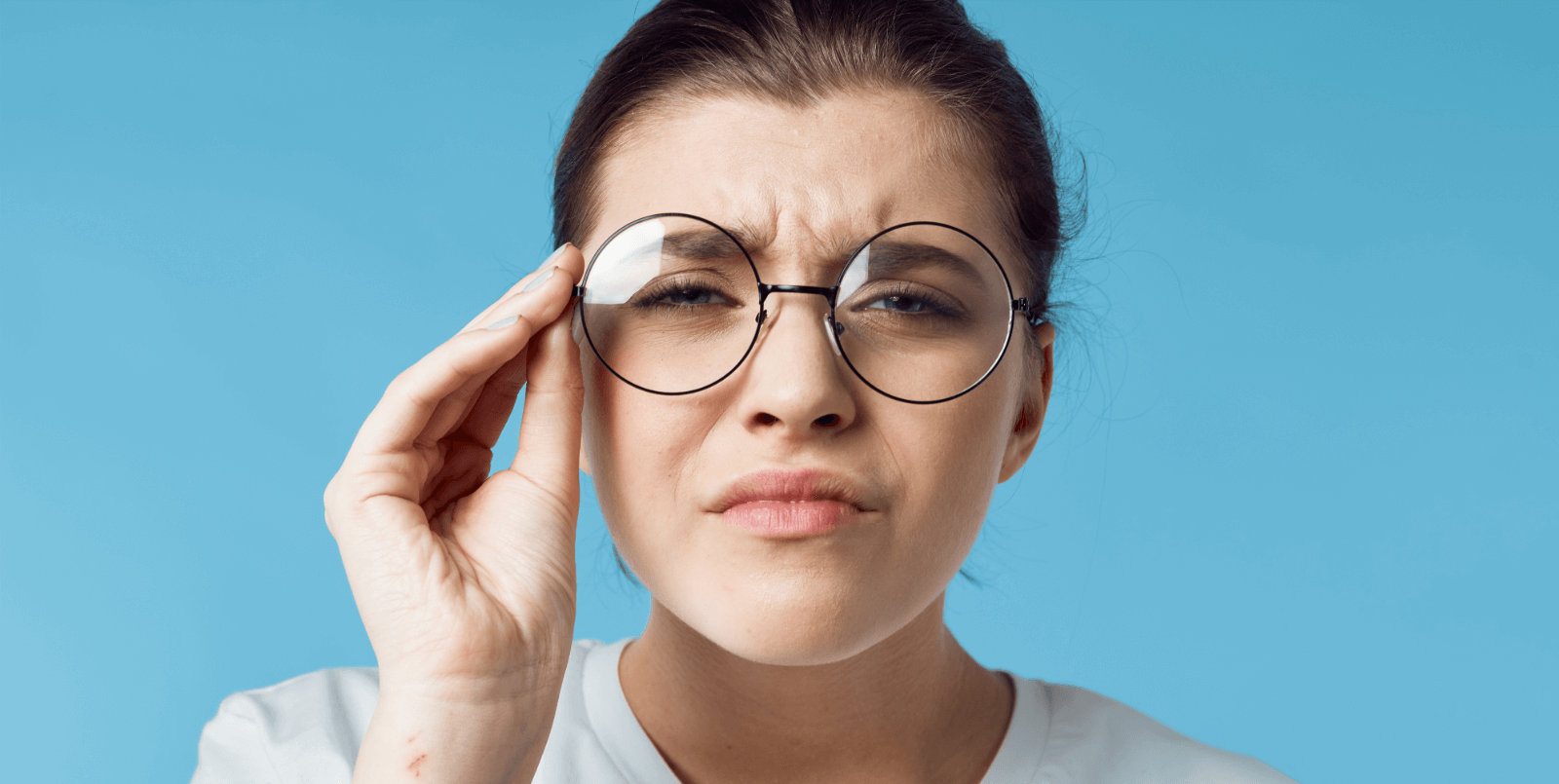
There are many types of vision problems that can be connected with anxiety. If you find it difficult to see clearly, notice flashes or visual snow, or feel like lights become too bright when you are anxious, it doesn't necessarily mean there is something wrong with your eyes: these can be part of the body's natural anxiety response (as inconvenient as they may be). In situations where fear is called for, they can actually help you, which is one reason to feel less anxious about your visual problems.
This article will discuss the various types of visual problems that can be associated with anxiety, why they occur, and how to prevent them.
Visual Problems Associated With Anxiety
If you experience any of these visual problems during your anxiety attacks, you are not alone. Many people experience visual problems when they suffer from profound anxiety.
- Light Sensitivity - Light sensitivity can be caused by anxiety due to a temporary dilation, or enlargement, of the pupil. Pupil dilation occurs when the body believes it has a reason to be afraid, as part of its fight or flight response. This is one reason why scary movies often use special effects to give scary creatures or people eyes that are black, or all pupil: it triggers a fear response in us. When your pupils dilate, they let more light in, improving your vision and helping you catch little visual details that may be useful to you in evading or combating the trigger.
WHAT TO DO: A short term fix for light sensitivity are sunglasses, and some eye drops that are designed to decrease light sensitivity in the short term. However, it may be easier just to wait until the symptom passes, as lying down in a dimly lit room will both be easy on your eyes and may help you to relax.
- Blurry Vision - If the world seems to become blurry and you find that you are suddenly unable to see faces or read signs clearly, this can also by a symptom of anxiety.** It can be caused by an increase in blood pressure and/or hyperventilation, and is often accompanied by dizziness and sometimes nausea. Blurred vision occurs because your system is being flooded with more oxygen than it needs, and is trying to alert you of an imbalance. It may also have to do with pupil dilation, the symptom mentioned above, which can lead to your eyes being overwhelmed with light and unable to focus.
WHAT TO DO: Avoid driving or operating heavy machinery while experiencing this symptom, as it is similar to a symptom of drunkenness and keeps you from getting all the visual information you need to operate safely.
- Tunnel Vision When you are experiencing anxiety, "tunnel vision" - or the sense that you can only see whatever you are looking directly at (with the peripheral part of your vision fading or disappearing entirely) - can make you feel even more anxious. In reality, it's just your eyes eliminating your awareness any stimulus around you that may be unnecessary to dealing with the problem at hand, and keeping you from getting distracted. Remember, anxiety is the activation of your fight or flight system - a system for keeping you safe from danger. Tunnel vision can actually be helpful if you're in danger, and is simply a nuisance when you're not. Your body figures that whatever is triggering your anxiety, you can't afford to waste energy or vision on anything else.
WHAT TO DO: The only way to really cure tunnel vision (if it is being temporarily caused by anxiety and not by a larger problem) is to relax. Don't try to fight the problem, and try not to panic about it: it is, after all, a temporary problem, and will fade after a few minutes.
- Visual Snow This is the common term for a visual effect that obscures your sight with what appears as snow, or an effect similar to the look of television static. While doctors aren't sure what exactly causes visual snow, they now know that it is not simply an after-effect (as was previously thought) of recreational drug use**. **For some people the sudden onset of visual snow can actually be a cause of anxiety attacks.
WHAT TO DO: If you experience visual snow exclusively as an accompaniment to anxiety, the best thing to do is to remember that it is a harmless side effect and not a sign of anything worse. If, however, you are experiencing persistent visual snow that does not often abate, talk to your doctor to be sure your eyes are healthy and there are no other underlying problems.
- Seeing Flashes of Light - This symptom often accompanies light sensitivity, and can be your eyes attempting to adapt when they feel they are being exposed to too much light. They may also be caused by an increase in heart rate and/or dehydration: you may have noticed that when you run or exercise for an extended period of time you see similar flashes of light when you stop. When your body is being taxed, it will try and warn you that it is struggling and try to get you to relax so that it can adjust.
WHAT TO DO: Be considerate of your body and give it a moment to relax. It is best to sit down or lie down while the flashes last to encourage your heart rate to return to normal, and to avoid hurting yourself due to impaired vision.
Feeling like your body is malfunctioning can be hard to handle, and unexpected visual changes can actually have the effect of increasing anxiety if you don't know what's going on or how to fix it. Fortunately, there are steps you can take to keep from experiencing the anxiety attacks that lead to these visual problems.
How to Prevent Visual Problems Caused By Anxiety
Preventing visual problems caused by anxiety is usually a matter of preventing the anxiety itself. However, there are also things you'll want to avoid during your anxiety attack to decrease the likelihood of these symptoms occurring.
- Drink Lots of Water Drinking water will help keep you hydrated and prevent your body from being additionally taxed by the anxiety attack.
- Turn off the Lights Too much visual stimulus can make the visual problems that accompany anxiety more severe. Helping you eyes calm down and stop overreacting will have the added benefit of helping you calm down.
- Sit/Lie Down When you feel yourself getting anxious and you know visual problems may crop up, it's best not to be doing anything that requires visual acuity. If you happen to be driving, this means pull over. Being in the middle of something when you get anxious can have the effect of making you more anxious about how it is affecting what you are doing, which can subsequently worsen your vision. Also, getting plenty of rest and relaxing or meditating in a sitting position once a day can make you calmer overall and decrease the frequency of you anxiety attacks.
- No Caffeine Put down that soda or coffee you were working on, and if possible avoid caffeinated beverages altogether. Caffeine just increases your heart rate and puts additional pressure on your system. Do yourself a favor and stick to decaf coffee, sodas and teas.
It can be hard to cope with visual problems when you are already experiencing the other mental and physical effects of anxiety, but knowing that you are not alone and taking preventative steps can help to stop visual problems before they start and make your anxiety more manageable.
Summary:
Anxiety can cause blurry vision, tunnel vision, light sensitivity, visual snow, and potentially seeing flashes of light. Each of these has a different cause and may need to be addressed in specific ways to each visual problem. Only a comprehensive, long-term anxiety treatment will prevent future vision problems.


 Trusted Source