



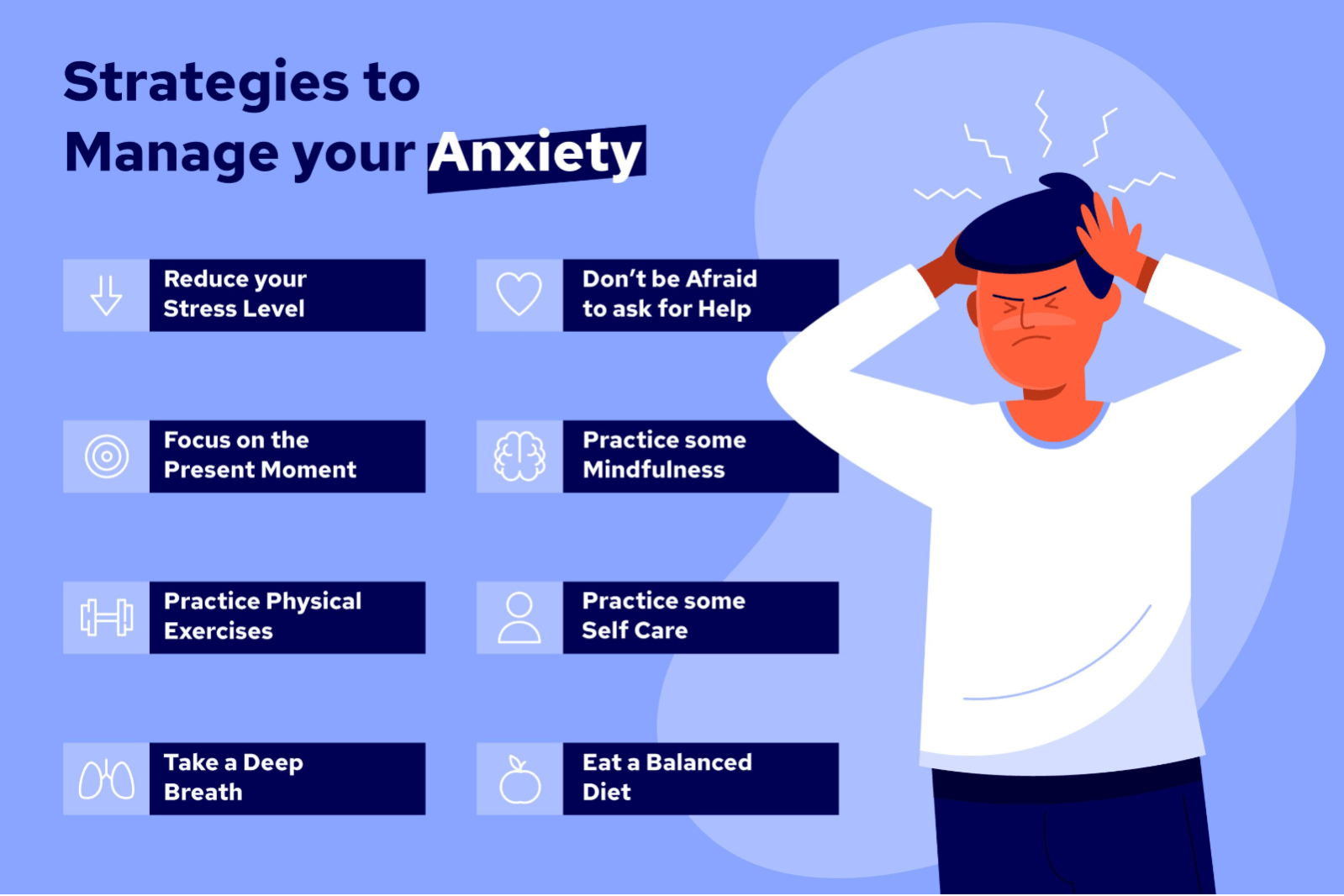
Anxiety is something that can benefit from professional help. Professionals are experts at working with your symptoms, especially if you've tried everything and cannot seem to get your anxiety under control.
But few people want to see a professional - especially when there are self-help techniques available for anxiety and panic attacks that can be completed in the psychological comfort of your own home, and are far more affordable. In this article, we'll review some of the easiest ways to reduce anxiety without seeing a psychologist.
The Basics of Self-Help Techniques
The following are individual self-help techniques that are extremely valuable for curing anxiety. But ideally, you need to consider a more comprehensive at home strategy that will effectively reduce your anxiety symptoms.
Each of the following strategies is known to reduce anxiety. Some of them are variations of what you would do in the psychologist's office. Others are strategies that you may not have realized are potent tools for anxiety.
Self Help For General Anxiety
There are many different ways to try to address your anxiety. The following are some of the most effective techniques for treating your generalized anxiety disorders. After we review these strategies, we'll take a look at other self-help techniques for panic disorder, which often requires very different solutions than other forms of anxiety.
Systematic Desensitization
Many people suffer from anxiety symptoms but do not necessarily have any specific fears or issues. They're simply anxious, either physically or mentally.
But for those that do have fears, desensitization is the act of mentally "getting used to" the fear so that it no longer causes fear. Let's look at some examples:
- Those with recurring thoughts that they cannot control (known as obsessions, a hallmark of obsessive-compulsive disorder) often develop a fear of that thought. Studies have shown that by sitting in a comfortable environment and purposefully thinking those thoughts will end up causing the thoughts to become boring. Eventually, they won't cause fear, and the person will think about them less.
- Those with panic attacks that are triggered by some type of physical sensation, like feeling dizzy, experience a rush of fear when faced with that sensation. So to fix it, the person can continually subject themselves to that sensation over and over again (in the case of feeling dizzy, by spinning themselves around in a chair) until it doesn't cause any anxiety.
- Those with phobias may need to take a longer, systematic approach, but still approach it the same way. For example, if you have a fear of getting a blood test, you first think about getting blood drawn until those thoughts cause less fear. Then you look at a photo of someone getting blood drawn until it doesn't cause fear. Then you watch a video of a someone getting blood drawn e until it doesn't cause fear, and finally try to be in the same room with someone else getting their blood drawn until it doesn't cause fear. Feel free and spread it out over multiple days, or try multiple photos/videos/snakes.
This type of strategy is often used in cognitive behavioral therapy, but you can also try to do it on your own at home. However, there is a caveat - if you decide to use this strategy, you cannot quit or take a break. That can cause what's known as "negative reinforcement," which could actually make the fear worse.
But if you're ready to commit to this type of self-help treatment, you'll find that those individual fears improve in no time. Try to repeat the process every once in a while in order to make sure the fear never comes back.
Exercise
Several studies have shown that exercise can definitely reduce a person’s anxiety. Some studies have even shown that exercise, when compared to anxiety medications, can even be just as effective in reducing anxiety as CBT and medications.
Studies have found that two specific types of exercise can help reduce your anxiety: aerobic exercise and resistance exercise. But there is nothing wrong with trying different types of exercise that you would normally do on your own to see if they make you feel better. If they do reduce your anxiety, keep doing them. But if they don’t, then seek out training in either aerobic exercises or resistance exercise.
Why would exercise reduce anxiety? The answer is actually a combination of a variety of factors:
- Natural Painkillers When you exercise intently, your body releases painkillers in your brain to make sure that you don't experience too much discomfort. These painkillers, known as endorphins, are actually the same exact chemicals that create a "good feeling" and relaxed mood. So while your body isn't technically trying to make you feel good, exercise acts very similarly to an anxiety drug.
- Reduced Symptom Severity Many of the symptoms of anxiety are also reduced simply because of the effects exercise has on the body. Muscle tension is harder when your muscles are relaxed after exercise. Unused energy doesn't get placed in negative areas because there is less unused energy. Sleep is easier because your body needs to rest to recover from the exercise, and so on. There is evidence that when the symptoms of anxiety are weaker, you actually experience less anxiety in the future because coping becomes easier.
All of this ignores many of the other smaller benefits, such as engaging in healthy distracting activities, getting outdoors, and improving your heart health - all of which can affect your anxiety levels. Exercise may be for physical fitness, but there is simply no denying that it can have a powerful effect on mental health as well. In addition, reduced anxiety will improve your physical health.In particular, reduced anxiety will improve your cardiovascular health.
Worry Journals
There is much research that shows that anxiety is caused by worrying thoughts. If you have worrying thoughts, they will make you anxious. And if you have worrying thought much of the time, that will keep you in a free floating state of anxiety.
It turns out that there is a very effective method that you can use on your own to counter these thoughts that cause anxiety. That method is called a “Worry Outcome Journal.”
In a worry journal you write down the thoughts that are worrying you. The best thing to do is to write them down as they happen. After you write down your worries, then you make predictions about whether or not the things that you are worrying about are likely to happen. Next, you are asked to record how much distress each worry is causing you. Finally, you write down whether things turned out better or worse than you were thinking they would.
A very recent study has shown that people who use this method have a great reduction in their level of worried thoughts.
The virtue of keeping a worry journal is that it takes you outside of your thoughts and gives you a means of looking at them objectively. When you step outside of the stream of worried thoughts, it gives you the ability to stop believing them.
Much of anxiety is spent trying not to have anxious thoughts or feelings. Very often the individual does whatever they can to push those thoughts and feelings away, hoping to be free of their anxiety. This doesn't work, and it also ignores a very important part of controlling anxiety - learning to re-think your thought processes.
Rather than try to fight your thoughts away, you can write them all out in a journal. This has several advantages for those living with anxiety:
- Research has shown that when you write out thoughts, you won’t focus on them as much. This is believed to be because the mind knows when a thought is in a permanent place, so it doesn't feel as pressured to remember it.
- Writing out the thoughts can be a therapeutic activity. It gives you an important break from the thought by focusing your attention on an activity and allows you to process it rather than simply feel the anxiety of it. It also forces you to think about it, which studies have shown is actually an important tool for fighting its severity.
- Many of the fears of anxiety are irrational. Writing them out forces you to really think about them. Even though you know they're irrational, they often feel very real. However, when you go through the slow process of writing out your thoughts, you'll often find that you start to see how irrational they become. You can also follow that up by writing out all of the reasons the thought is irrational so that you start to change your mindset on these types of issues.
Writing out your thoughts in a journal is incredibly therapeutic, and definitely something worth considering. There is also another variation of this type of self-help strategy that can be very valuable, known as "positivity journaling."
Anxiety creates a considerable amount of negative thinking. It's actually a symptom of anxiety since the changes in your brain chemistry cause you to translate information more negatively. Unfortunately, that negativity actually fuels anxiety further, making it harder to stop anxious thoughts.
So one strategy designed to create positive thinking is to start "positive journaling." Every day, write down 10 to 20 specific, positive and happy things that happened that day. You have to set a high minimum and force yourself to reach that minimum every day, without skipping a day.
Eventually, your mind - knowing that you have to fill in 10 things - starts to notice all of the positive things because it's trained to figure out what goes in the journal, and in the end, you'll find that you have an easier time thinking positively as a result. While separate from a thought journal, this is another type of journal that has been popular in the past.
Self-Help for Panic Attacks and Panic Disorder
Living with panic attacks is difficult. Fortunately, there are panic attack self-help tips that can potentially stop you from experiencing further panic attacks, and while additional help may often be necessary, these tips alone can help some people stop their anxiety altogether.
There are two levels of help that you can give yourself for panic attacks:
- There are things you can do to reduce your anxiety during a panic attack
- There are things you can do to reduce your overall level of anxiety and decrease the likelihood that you will have panic attacks.
Reducing Panic in the Midst of a Panic Attack
There are a number of things that you can do to decrease your panic and anxiety in the midst of a panic attack. That includes
- Take Conscious Control of Your Breathing Take slow, deep, mindful breaths, and this can help you relax in the moment. The most important thing is to slow your breathing down.
- Get Yourself to a Quiet Place This will help you regroup and calm yourself down. Then you can return to whatever it was you were doing.
- Tell Yourself That This Will Pass Panic attacks are self-limiting. They will come to an end on their own. Just sit tight and remember that this too shall pass.
- Know Your Own Health Panic attacks will often present with the same symptoms of a heart attack or of other cardiorespiratory illnesses. If you know that your heart and lungs are basically healthy, it will help you relax by understanding that your chest pain or other symptoms are the product of your anxiety attacks; and not the symptoms of heart disease.
- Remember That a Panic Attack Will Not Make You Go Crazy.
- Consciously Imagine a Positive Situation Picture yourself in a beautiful natural setting. Or remember the last time you were in a happy moment with friends or family. This will help you reduce your panic as well.
Self Help Methods for Preventing Panic Attacks
There are several approaches you can take on your own to reduce the fears and negative expectations that cause you to have panic attacks. The most effective thing you can do is something is desensitize yourself to the things you are afraid of through gradual step by step exposure to those triggers, but there are other things as well. Here’s a list of things that you can do.
- Learn About Anxiety and Panic Attacks Study the basic science of anxiety and panic attacks. It will help you get some perspective on your anxiety/panic attacks and reduce your fear of them.
- Learn How to Intuitively Relax Your Muscles If you learn how to automatically relax the muscles that tense up when you get anxious, it can help you prevent panic attacks. It is similar to biofeedback training. Here’s what you do: At a time when you are not in the midst of a panic attack, tense the muscles that get tight when you are anxious. Then relax those same muscles. Do this as a regular exercise over and over again. This will actually help you relax in the moment. And more than that, you can learn to cue in this muscle relaxation automatically when you begin to get tense.
- Desensitization Through Exposure Desensitization is a process in which you gradually expose yourself to the things you are afraid of in a safe situation. The idea is that by placing yourself in safe situations with these stimuli that you fear, you will teach your mind and body not to be afraid of them.
A. Desensitization for Panic Disorders: Panic attacks are often triggered my physical sensations that you fear are either a sign that a panic attack is beginning or a sign that you are having a heart attack or some other serious health problem. In the process of desensitization therapy you expose yourself gradually to the physical sensations that trigger your panic attacks.
For example, if a racing heart or shortage of breath are triggers that set off your panic attacks, you can do exercises that will induce a mild racing heart or shortage of breath and slowly teach yourself that you do not need to be afraid of a racing heart or shortage of breath. You do the exercise until you start to feel the feared sensations, and then stay with these sensations rather than escape. Gradually you will learn not to be afraid of those sensations.
Finally, although using these tools can be very effective in helping you to manage your panic disorder, sometimes they are not enough. Some people have very severe anxiety, and despite all of their best efforts, they might not be able to get relief from their anxiety on their own. There is nothing to be ashamed of if you can’t relieve your anxiety by yourself. Remember, approximately 40 million Americans suffer from anxiety and anxiety disorders, and they are often severe. If you are unable to remedy your anxiety on your own, then the thing to do is seek professional help by seeing either your family doctor, psychiatrist or psychologist.


 Trusted Source