



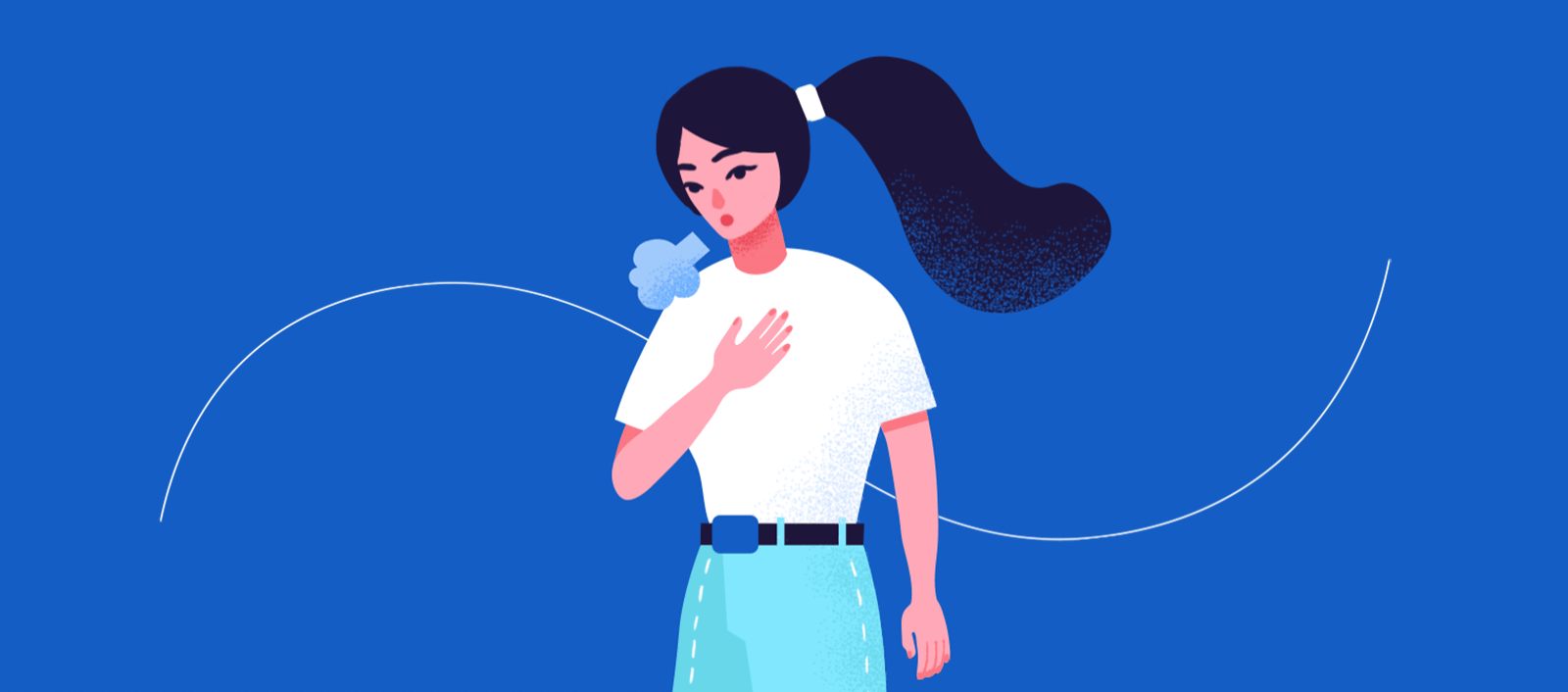
Poor breathing is a problem for many people living with anxiety. In some cases, anxiety can be brought on by poor breathing habits, but more commonly the experience of anxiety results in the creation of poor breathing habits by constantly stimulating the autonomic nervous system, ultimately changing the way you breathe.
Some common forms of poor breathing associated with anxiety include:
- Shallow Breathing—Breathing in too quickly.
- Monitored Breathing—Thinking about your breathing too much.
- Over-breathing—Breathing in more air because you feel you're not getting enough.
Poor breathing habits can lead to a variety of issues, the most common of which is hyperventilation. Hyperventilation is responsible for many of the symptoms of anxiety attacks, including chest pain and rapid heartbeat.
The solution to poor breathing is, of course, learning healthier breathing habits. Proper breathing can be calming to the mind and body. Many people use breathing exercises to both stop hyperventilation and calm themselves when they're feeling high amounts of anxiety, and with the right breathing techniques, you can actually reduce the extent of your anxiety and anxiety symptoms.
Breathing exercises take practice, so don't expect them to work right away. But the more you practice, the better you'll get, and the easier a time you'll have calming yourself down during an anxiety attack or panic attack.
DISCLAIMER: Breathing exercises are for those considered in good heart and lung health and have been cleared by a doctor. Those that have heart, lung, or other medical issues that may affect or be affected by breathing should talk to a doctor before they attempt any breathing technique.
Exercises to Improve Breathing and Calm the Body
Co2 Rebreathing
What is it Good For: When you hyperventilate, it often feels as though you aren't getting enough oxygen. But the reality is that you are actually getting too much oxygen, and your carbon dioxide levels are too low.
How it Works: Cup your hands over your mouth and breathe slowly. You can also try using a small paper bag. The idea is to prevent the expulsion of carbon dioxide and get it back into your lungs so that you regain the balance of Co2 in your system. Hold it over your face when you breathe, and keep breathing as you would normally to regain your carbon dioxide levels.
Additional Thoughts:**Research is mixed on the effectiveness of rebreathing in regaining your Co2 levels. It's hard to stop an anxiety attack, and rebreathing doesn't appear to stop one completely. But it may help reduce the severity of the symptoms, which should decrease the likelihood that the anxiety attack drains you of your energy.
Deep Breathing for Relaxation
What is it Good For: Deep breathing isn't always the best tool for an anxiety attack, but it is a good tool for high stress/high anxiety. Taking calm, deep breaths has a soothing effect on your body. It's not clear exactly why, but it's likely that controlled breathing combined with a few minutes away from your stressful situation gives you an opportunity to relax in a way that few people can do in the moment.
How it Works: There are different types of deep breathing strategies, but the simplest involves sitting in a chair with your back straight and your arms on the armrests. You take a deep, slow breath in through your nose lasting close to 5 or 6 seconds. You then hold for a few seconds, and breathe out slowly through your mouth, taking close to 7 seconds (breathe out like you're whistling). Repeat 10 times.
Additional Thoughts: **Deep breathing can be difficult at first and not very relaxing. It takes some practice. But once you've gotten used to it, it becomes much easier. You'll find that the deep breaths calm you the most by your 10th breath and should lower your blood pressure as well. As you improve, you can lengthen the number of breaths to 20.
Advanced Inhale-Hold-Exhale Deep Breathing.
What is it Good For: Advanced deep breathing combines both of the benefits of the above two breathing exercises, making it great for those suffering from severe anxiety and panic attacks. However, it can be hard to master in a time of panic, so many people struggle to perform this type of exercise at first. If you're confident you can get the strength to use this exercise, you may find yourself able to calm down much faster.
How it Works: You'll need to find a much more comfortable place for this to work, and expect it to take a considerable amount of time. Find a quiet place you can stay for at least 15 to 20 minutes. Sit like you would for deep breathing with your back straight, but try to be comfortable.
For this exercise, you will be monitoring your heartbeat to keep a good rhythm. You will do at least 10 breath cycles, and each cycle will be comprised of three stages:
- 1. Inhale, count 5 heartbeats
- 2. Hold breath, count 7 heartbeats
- 3. Exhale, count 9 heartbeats
When you breathe in, make sure that you're breathing in through your stomach first and your chest second.
The slow, managed breaths are very calming. Holding your breath also helps regain your Co2 levels, to reduce some of the effects of hyperventilation.
Additional Thoughts: **It can be very hard to perform this type of exercise, especially if it's your first time with breathing exercises. During an anxiety attack, it's hard to gather your thoughts enough to count heartbeats and calm your body. But if you can master this technique, you'll find that you should be able to calm yourself during a panic attack, and possibly experience some relief from your panic symptoms.
Choosing the Right Breathing Exercises
There are other breathing strategies you can try as well. For example, some people prefer to add a mental distraction to their breathing exercises to take their mind off their panic. You may try to:
- Imagine yourself tracing a square in your mind and inhaling/exhaling every time you turn a corner.
- Imagine blowing on a candle, except rather than try to blow it out, you try to blow it just softly enough that it dances around.
These are the types of additional strategies that may also help you relieve some of your panic and anxiety symptoms. Your next course of action is an anxiety treatment. By curing your anxiety, you'll also stop your poor breathing habits.


 Trusted Source