



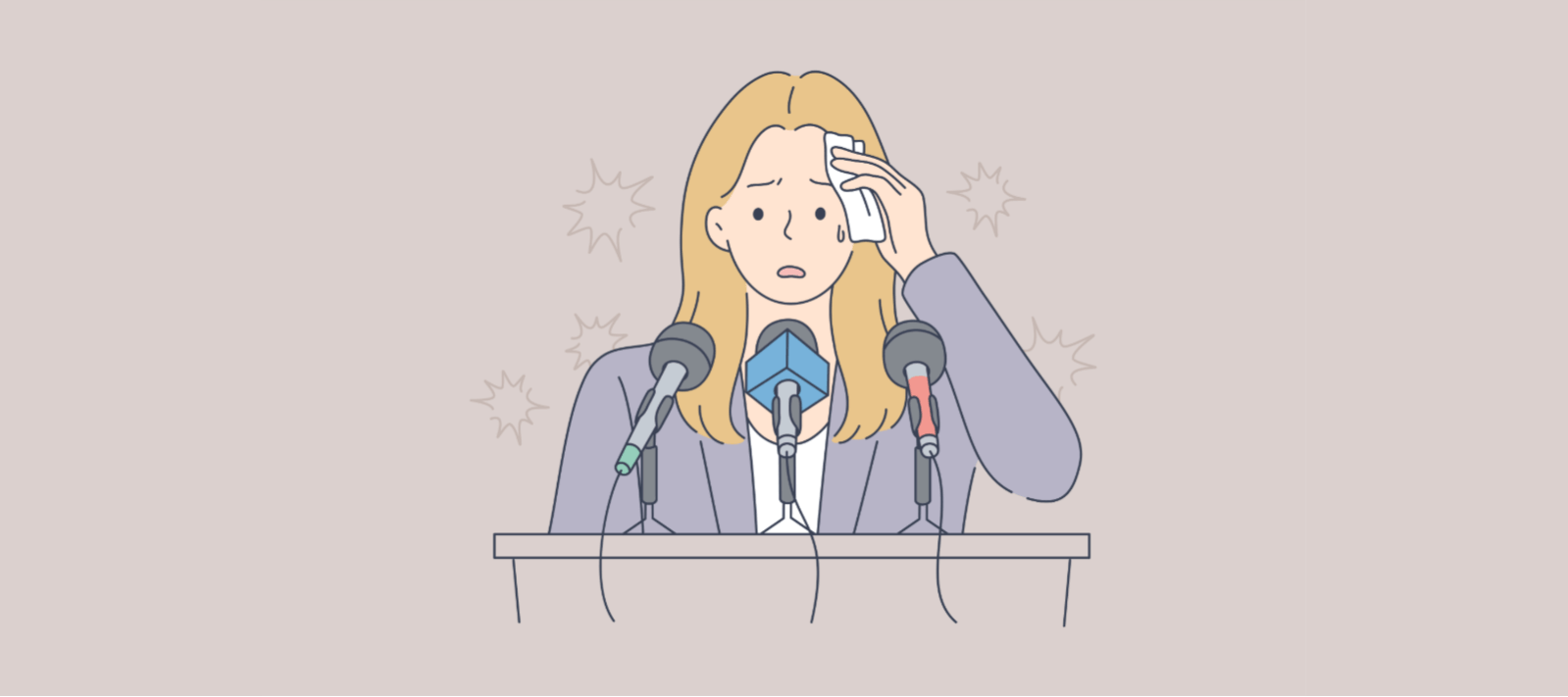
Highly socially anxious people often avoid talking when they don't have to. This can have the result of making them seem overly shy, sad, angry, snobbish, submissive, or mentally slow, when in reality they are probably none of those things.
The actual reasons why anxious people may not like to talk vary from person to person. However, some of the more common difficulties that people with anxiety encounter when it comes to talking are listed below, along with strategies for overcoming them.
Speech Problems and Incoherency
Interestingly, a fear of talking tends to be present in every anxiety disorder. It's most commonly associated with social phobia, but anxiety in general causes people to want to avoid things that increase their anxiety - like talking.
Have you ever had a thought you wanted to share something, started to put it into words and then found that the words seemed to come out haltingly, backwards, or in the wrong order entirely? This is not an uncommon problem for anxious people. An anxious person may be fully capable of forming their sentences clearly and eloquently on paper, and yet incapable of stringing together a few words when it comes to speaking in public due to the high levels of stress they feel in social situations.
This issue causes them to develop a fear of talking, because they're worried about being judged or saying the wrong thing. They may find that even when they do talk and they hold a conversation well, they start to rethink it so often that they manage to find fault even if they did a great job, and ultimately reinforce their fear.
It is a vicious cycle wherein you feel anxious about speaking, then you find that you can't speak because you're too anxious about speaking, then you become anxious about not being able to speak, and the cycle perpetuates itself. Even if you do manage to speak, over-attention applied to the mechanisms of speech (such as swallowing regularly and pausing to breathe) can actually cause you to do embarrassing things like spitting, choking or having to pause awkwardly in the middle of speaking, causing your speaking phobia to increase even further.
In order to halt the cycle, try saying the words in your head clearly before you say them aloud. If you stumble or stutter, smile or shake your head to show that you are at ease with yourself even though you have misspoken, as most people are (because even confident, seemingly fearless people do stutter occasionally), which will help others be more at ease. If you visibly panic or become upset, others will feel uncomfortable and the situation will become more rather than less tense.
Mind Goes Blank
Most people have experienced this phenomenon at least once in their life: when giving an important presentation, going to ask your boss for a raise, or attempting to finally ask out that cute guy or girl you see every day at the coffee shop, you inevitably open your mouth and find that there's absolutely nothing there. For people suffering from anxiety, that can be every single time they open their mouth.
Not only is every social interaction fraught with the same kind of stress and pressure that most people only feel in extreme circumstances, but even the fear of that blank mind and the social awkwardness that it can create, even if they know exactly what they want to say and how they want to say it, can keep an anxious person from even trying to speak, meaning that they don't even get to the point of opening their mouths and not having anything to say.
If this sounds like you, you may want to try this simple exercise called grounding yourself. When you are in a situation where you know you need to speak (in a meeting at work, or out with a group of people), but find that you are too panicked about speaking to keep the words in your head (or are too afraid of losing them once the spotlight is on you), just look around you and name (in your mind) the things that catch your eye: floor, table, desk, chair. Name them confidently and focus on that feeling of stability and correctness, allowing yourself to realize that you know exactly how to say the right thing on cue, and then use that confidence you have just built to speak your mind aloud.
Inability to Put Thoughts into Words
Sometimes when you are anxious and frequently encounter the problems mentioned above, you grow unaccustomed to having to put your thoughts into words on the spot. You are used to having the time to sort through and gauge all your ideas, and don't feel good about speaking before you are absolutely confident and committed to what you are saying.
The fact is, speaking is not like writing words on a page or thinking thoughts in your head. Spoken words are there for everybody to see, and you can't erase them or take them back. However, other people do it all the time. If you feel uncomfortable with the idea that the opinion you are voicing might not be something you are entirely sure of, you can say that you are not sure, or you can phrase your statement as a question. Language comes with all sorts of loopholes: it just takes practice to learn how to use them effectively.
In addition, practice is all you need to get good at condensing the thoughts you are having into a few succinct, bite-size ideas. It's important to remember that you don't have to serve up everything in your entire mind to your audience like a giant steak on a platter. Try cutting it into smaller, easier-to-digest pieces so that people can engage with your ideas more easily and not be overwhelmed by the sheer amount of thoughts you are sharing, causing awkward silences that only make you feel more anxious.
Feelings of Inferiority/Superiority
Let's face it: when everyone around you knows how to do things that you don't know how to do, and can't figure out how to do, despite the fact that others seem to do it naturally and without thinking, you are bound to feel inferior to them. This can lead to feelings of sadness, anger, resentment and embarrassment, and any of the four will understandably make you want to be quiet around the people making you feel that way.
Others have the opposite reaction and find that other people's way of sharing every thought that floats through their brain without pausing to chew it over and find out whether it is something worth saying to be even more awkward and unappealing than they find talking to be, which can lead to a disdain of other people compounding their fear of talking (while the same disdain also sometimes functions as a defense mechanism against a feeling of inferiority hiding just underneath the surface).
Feeling inferior or superior to others is not only unrealistic; it is also harmful to you. While it is certainly true that others may be better than you at some things, and that you may be better than others at some things, the opposite is also true. Excusing yourself because you have nothing to offer, or others because they have nothing to offer you, is simply unrealistic. Try concentrating on the things you value about yourself, or the things you admire about others: it may give you the confidence and motivation that you need to finally speak.
Fear of Being Judged
Being judged is the fear that underlies most of the above causes of anxiety. We are constantly told that it doesn't matter what other people think, while simultaneously being told that first impressions are everything. In addition, you know for a fact that the way you perceive others has a huge impact on the way that you interact with them. After all, what else do you have to go on?
However, it is important to also consider the fact that other people can surprise you, and completely alter the way you think of them, simply by saying something you wouldn't have expected from them, suddenly making them seem smarter, friendlier, or more relatable. If you don't allow yourself to build on the impressions you make with people by shutting up the instant you feel that you have been judged, whatever negative judgment has been made will unquestionably remain unchanged.
On the other hand, by realizing that the more you say, the more chances you will have to impress others and be judged favorably by them, you will be able to conquer your fears of being judged and find yourself being seen not as you fear you'll be seen (i.e., mistakenly and negatively), but as you truly are.
Learning to Change This Fear or Behavior
Changing your behavior can be scary, especially when you are used to acting and responding one way and haven't had any practice doing anything else. Resigning yourself to the idea of being a beginner is the only way to change your social comfort level for the better. It may take time, and it may not always be fun, but in reality, you are already a person capable of talking comfortably in a social setting: a person with thoughts and opinions and vocal chords. You don't have to try to be that: you already are, naturally.
When practicing putting those thoughts and opinions out into the world, notice how your bravery in doing so inspires other people to do the same, and find strength in realizing that everybody needs a little help being brave enough to say what's really on their mind.
Here are some tips that can help you overcome your fear of talking:
- Start Strong If you go to an event and you're determined to talk, start talking from the outset. Don't wait for that opportune moment. People get into habits, and if you start talking immediately you'll often find it becomes much easier over time.
- Get a Supportive Friend Studies have shown that those that feel loved and supported by close friends are much more confident when speaking in public. They don't worry as much about being judged because they know that the other person with them will always be proud of them. Find that supportive friend and you'll have an easier time adjusting.
- Ease Into It Many people find it easy to speak to a friend, and it gets harder and harder to talk in groups. Once you have that friend, work with them to add more and more people around you over time until you get more confident. For example, start with one friend, then add another friend, then have them add another stranger and so on. Spend each time with that small group, growing it until you get used to talking.
Overall, the best way to stop your fear of talking is by attacking your anxiety directly.


 Trusted Source